
Fidelity Tests and Rock n’ Roll: Barney Dawson’s Sound Advice
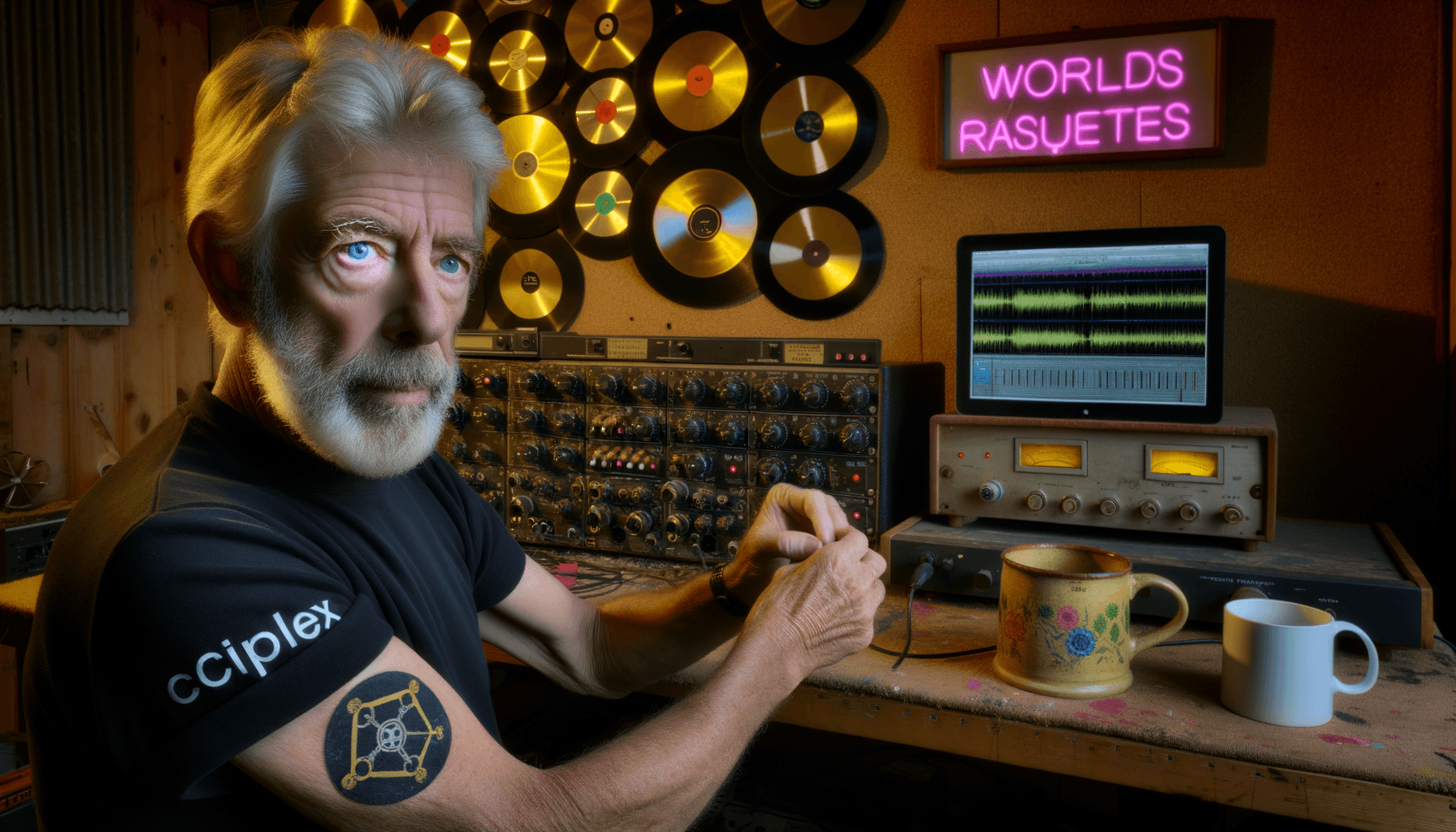
“Sound fidelity is like relationships,” Barney Dawson declares, scratching his salt-and-pepper beard while adjusting the knobs on a vintage mixing console. “You’ve got to test it properly before you commit, or you’ll end up with a lifetime of distortion.”
At 60, Barney Dawson isn’t your typical tech expert. The frontman of legendary Aussie rock band The Mongrel Sons has spent four decades creating sonic mayhem across pubs and stadiums alike. But today, in his cluttered home studio in Sydney’s inner west, he’s about to school me on the surprisingly complex world of fidelity testing.
Scene 1: The Garage Oracle
Barney’s garage-turned-studio is a temple to musical excess. Gold records hang crookedly next to faded tour posters. A stuffed kangaroo wearing sunglasses guards a collection of vintage guitars. The air smells of coffee, sandalwood incense, and what I suspect might be yesterday’s takeaway curry.
“Most people think fidelity testing is just for tech nerds and banking types,” Barney says, offering me a mug of tea in a chipped cup that reads ‘World’s Okayest Rockstar’. “But musicians? We’ve been doing fidelity testing since before computers were a twinkle in Steve Jobs’ eye.”
I raise an interested eyebrow. “How so?”
“Take our 1989 album,” he grins, pointing to a framed record on the wall. “We recorded ‘Midnight Mischief’ three separate times with three different producers. Cost us a bloody fortune, but we were testing the fidelity of our sound to our vision.” He taps his temple. “It’s all about making sure what comes out matches what’s in here.”
Barney’s drummer, “Sticks” McKenzie, shuffles in wearing pajama bottoms despite it being 2 PM. “Tell her about the Amsterdam disaster,” he suggests, helping himself to my biscuit.
Barney winces. “1992. We were testing a new sound system for our European tour. The tech blokes assured us it was top-notch. First song in, the speakers blew, and the feedback was so bad it shattered the venue’s glass door.” He chuckles. “That’s what happens when you skip proper fidelity testing. Half the audience thought it was part of the show, the other half thought we were being bombed.”
“The best bit,” Sticks adds through a mouthful of biscuit, “was when Barney shouted ‘Is this what you call Dutch quality?’ and then realized the sound system was actually German. Diplomatic incident, that was.”
Barney leans forward, suddenly serious. “See, in tech or finance, a fidelity test failure might mean lost data or money. In rock and roll, it means 5,000 angry Dutch fans throwing wooden clogs at your head.”
Scene 2: The Unexpected Tech Heads
Later that afternoon, I find myself in the unexpected position of watching Barney and his bandmates hunched over laptops in their rehearsal space. The walls are soundproofed with egg cartons that have seen better days, and a neon sign flickering “No Requests” casts everything in a pinkish glow.
“You’re actually running fidelity tests?” I ask, genuinely surprised.
“Course we are,” says Lefty, the band’s bassist and surprisingly, their IT guru. “We’re launching our own streaming platform for classic Aussie rock. Can’t have it crashing during ‘Waltzing Matilda: The Metal Version’, can we?”
Barney nods sagely. “We learned the hard way. Remember our website launch in 2001?”
The band members collectively groan.
“We hired my nephew to build it,” Barney explains. “Talented kid, but he didn’t test it properly. Launch day comes, fans crash the server, and instead of our homepage, everyone got redirected to a Russian bride website.” He shakes his head. “Gained three mail-order marriages and lost our record deal in one day.”
“That’s why we’re so serious about fidelity testing now,” Lefty adds. “We’re running simulations of thousands of users accessing the platform simultaneously. Testing every browser, every device.”
Sticks pipes up from behind a drum kit where he’s been quietly practicing paradiddles. “It’s like when we test a new groupie before letting them backstage.” The room falls silent as everyone stares at him. “What? I meant we check their music knowledge first! Bloody hell, it’s not 1985 anymore.”
Barney throws a drumstick at him. “This is why we don’t let him do interviews.”
Turning back to me, Barney continues, “In financial systems, fidelity testing is about ensuring the system performs exactly as expected under all conditions. It’s no different for us. Our fans expect a certain experience. If our streaming platform buffers during the guitar solo in ‘Crocodile Rock Anthem’, we’ve failed the fidelity test.”
“And lost a fan,” adds Lefty solemnly.
“Plus,” Barney says with unexpected wisdom, “there’s a parallel between financial stability and musical integrity. Both require consistent performance under pressure.” He strums an A minor chord on a nearby acoustic guitar. “A bank’s system needs to handle transactions precisely as expected, just like my fingers need to hit these frets in exactly the right spots.”
Scene 3: The Unexpected Lesson
As the afternoon wears on, Barney takes me to his backyard, where a fire pit and several mismatched chairs create an unexpectedly cozy setting. The Sydney sunset paints everything gold, and for a moment, the aging rocker looks almost philosophical.
“You know what’s funny about fidelity testing?” he says, opening a beer. “Most people think it’s about finding what’s wrong. But it’s really about confirming what’s right.”
He points to a weathered amplifier sitting incongruously among the garden gnomes. “That amp has been with me since our first gig at the Woolloomooloo Pub in ’83. Before every tour, I still run it through its paces – full volume, different frequencies, sustained notes. Not looking for failures, but confirming it’ll do what I need when I need it.”
“That’s surprisingly profound,” I admit.
“Even a broken clock is right twice a day,” he winks. “And I’ve been broken plenty.”
Sticks wanders out with a plate of sausage rolls. “Tell her about the financial advisor!”
Barney laughs. “Few years back, I got this hotshot financial advisor. Young bloke, flash suit, talked about diversifying my portfolio. I asked him one question: ‘Have you stress-tested these investment models?’ He looked at me like I’d asked him to explain quantum physics in Swahili.”
“What happened?” I ask.
“I sacked him on the spot. Anyone who doesn’t understand the importance of testing systems under pressure doesn’t deserve to manage my hard-earned tour money.” He takes a thoughtful sip of beer. “Two months later, his firm collapsed in a market downturn. Their models hadn’t accounted for certain conditions – basic fidelity testing would have shown that.”
As the evening draws to a close, Barney picks up an acoustic guitar and absently strums a familiar melody.
“The thing about fidelity testing that most people miss,” he says, “is that it’s an act of respect. Respect for your audience, your customers, your fans. You’re saying, ‘I care enough to make sure this works exactly as promised.'” He looks up with a grin. “In rock and roll and in life, that’s about as good as it gets.”
“That,” Sticks adds, raising his beer, “and not setting your drum kit on fire in Canberra. Twice.”
As I gather my things to leave, Barney walks me to my car.
“You know,” he says, “they say you can’t teach an old dog new tricks. But this old dog learned that whether you’re testing sound systems, financial models, or technology platforms, the principle is the same: verify that what you’re promising is what you’re delivering.” He gives me a wink. “And always check if your amp is plugged in before you blame the sound engineer.”
I can’t help but laugh. “Any final words of wisdom on fidelity testing?”
Barney thinks for a moment, then grins. “Yeah. Life’s too short for untested systems and warm beer. And remember – just because something worked in rehearsal doesn’t mean it’ll work when there’s a thousand people watching and your leather pants have split.”
*raises interested eyebrow*
Well, isn’t that just the cherry on top of this sundae of chaos? I guess even rock stars understand that whether you’re testing financial systems or sound equipment, the principle remains the same: make sure what comes out matches what you intended to put in.
And as Barney would say, “It’s all fun and games until someone loses a guitar solo… or their life savings.”
*As a stand-up, I’ve always thought financial fidelity testing was like checking if your partner is faithful by sending in a more attractive person to hit on them. Sure, you’ll get your answer, but you might not like the results – and you’ll definitely need a new relationship advisor.*

